
Karen Dahlstrom
Love These Days
Out March 27, 2026
-
-
“When I realized I’d been wrong to doubt Willie Nelson, that’s when music really started to make sense.”
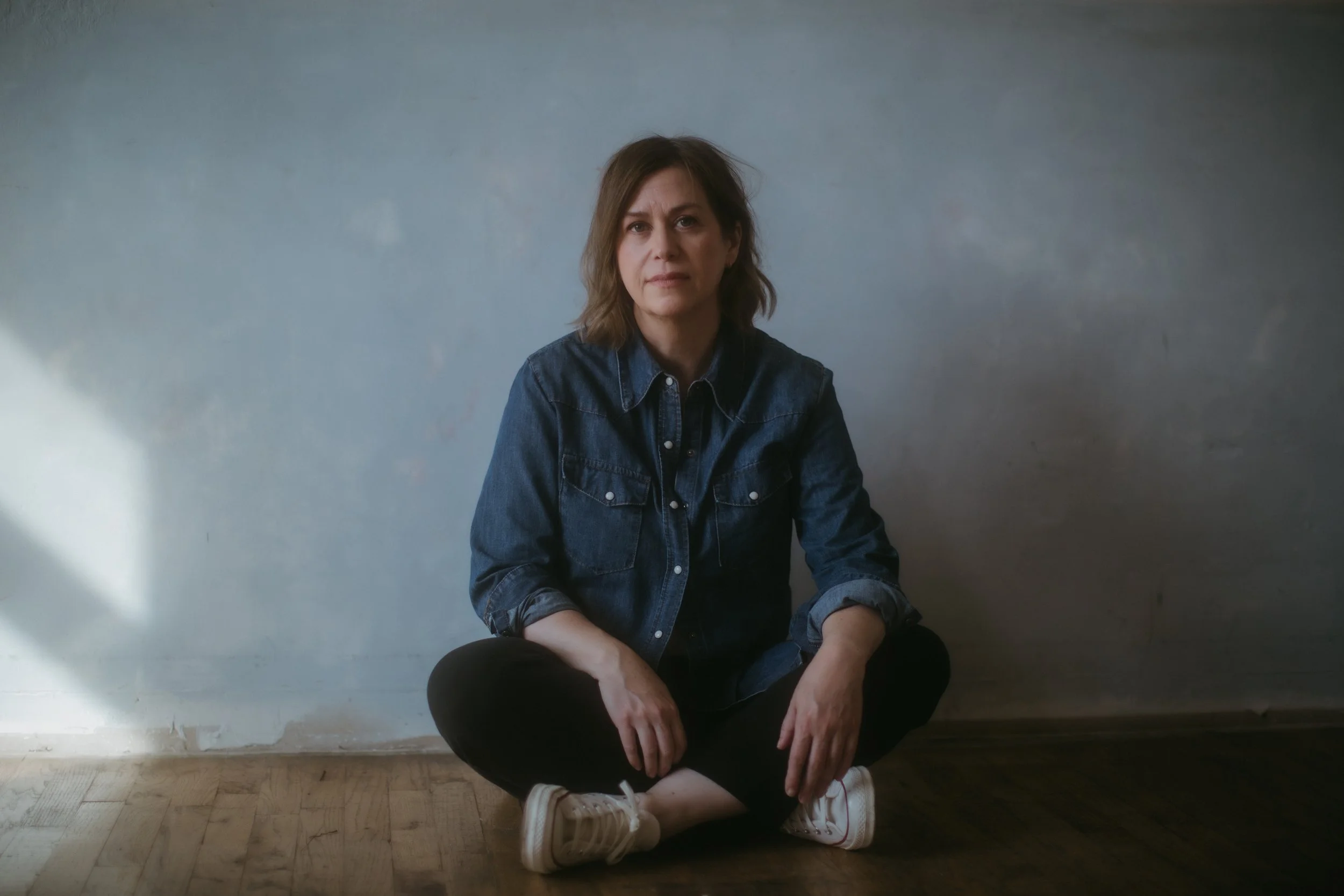
Karen Dahlstrom grew up singing in show choirs and jazz ensembles, earnestly emulating Sarah Vaughn and Ella Fitzgerald. She was a frequently selected soloist, competent and content within the confines of technique—until she wasn’t. “I enjoyed performance, but I also knew the limitations of my own voice. There’s a certain physical capacity you have to have in order to go really far.” She accepted what she considered her constraints, and shifted focus away from singing for the better part of her twenties. Today, listening to Dahlstrom’s incisive, unflinching lyrics, delivered straight to the heart with a husky, insurgent depth, it’s hard to imagine pesky technique was ever the point.
Around the age of thirty, Dahlstrom joined a friend at Amoeba Records in San Francisco, scouring for vinyl and perhaps even a rejuvenated sense of self. “I realized I didn’t even know what music I liked anymore.” She found herself drawn to artists whose music didn’t rely on any complex arrangement—Townes Van Zandt, Lyle Lovett, The Stanley Brothers, Hazel Dickens & Alice Gerrard, Jean Ritchie—country folksters palpably at ease alone with their instruments. “Three chords and the truth suddenly seemed like enough. Plenty, even.” She opted for High Lonesome over high brow, sentiment over skill. “The kicker was discovering Gillian Welch,” she says. “Other singers had made me want to perform, but she made me want to write.” In her third decade, Dahlstrom picked up the guitar.
Back in Brooklyn, Dahlstrom began sitting in on old time and bluegrass sessions at Jalopy and Sunny's in Red Hook. “You can’t help but learn from other people,” she says, wistfully recollecting a time that essentially amounts to a freshman year. She answered a Craigslist ad from a female-fronted band looking for a rhythm guitar-player who could sing harmonies, and in turn, joined the band Bobtown. The Americana trio released four critically acclaimed albums from 2010 to 2019, and Dahlstrom’s late-blooming love of folk didn’t just endure, it flourished.
For her fortieth birthday, Dahlstrom decided to record her own solo music for the first time. “The songs I loved most all comprised tales of Appalachia. I wanted to think about where I’m from—Idaho, and tell those stories of my own provenance.” In West Virginia, they mine for coal. In Idaho, gems. Dahlstrom dug into the pioneering history of the Northwest and unearthed the lore of her own family, along the way honing her lyrical voice into a sharp, penetrating tool. The Gem State EP she still describes as "something just for me,” and her follow up No Man's Land EP opened doors at Folk Alliance and the coveted Kerrville Folk Festival, where she's been a two-time New Folk Finalist. She continues to hone her craft with the support of songwriter communities such as Big City Folk in New York and workshops like Miles of Music and Sad Songs Summer Camp hosted by The Milk Carton Kids.
Kenneth Pattengale, of the famed folk duo, features on a standout track of Dahlstrom’s upcoming debut album, a song that spurred his instantaneous interest in her writing. “You never know what’s going to resonate with people,” she says, staunchly modest. That song, “Last of My Line,” grapples with the existential question of having children, or rather, what it means to not. “I never really thought about kids—I just assumed I’d have them someday. But as the years went on, biology and circumstance made the decision for me.” Dahlstrom’s lyrics are tender and poignant, her mood gracious and matter-of-fact. Things don’t go how you plan it / You play the cards you were handed / But I’ll make the best of my time / I’m the last of my line. It’s a potent indication of her signature strength, an ability to rend hearts with plain honesty—nothing more, nothing less. “I wrote the song I needed that I couldn’t find. I hope it finds the people who need it too.”
Love These Days emerges less like a debut than the sage, self-assured offering of a legacy artist. The album feels lived-in, like an old house, weathered nooks full of patinated personal artifacts. Dahlstrom guides a listener through, shining soft light onto dark shadows—anxiety, disconnection, regret, grief—creating the visibility that heals. “My songs are often resigned. I’m not looking for solutions, but simply acknowledging struggles.” Dahlstrom lost her mother in 2020. She wrote album standout “If I’d Known You” about sifting through boxes of belongings that told a different story than the one she knew about the woman she called mom: Notebooks and the novels that you read / Postcards of places you never went / And I wondered if I could’ve been your friend / If I’d known you. Untangling her own sense of complicated regret, Dahlstrom is candid—bravely so. That generous vulnerability courses through Love These Days, making it the kind of album that’s not just a window into a songwriter’s experience, but a living companion to one's own.
Now in her fifties, Dahlstrom isn’t interested in concealing pain or imperfections, lyrically or sonically. “Mistakes are allowed. The only time I fail is when I don’t emotionally drop in fully.” It’s her first time self-producing as a solo artist; she’s cognizant of the confidence it requires to hold that ethos on her own. “I have to trust my own taste above all, which is an empowering thing to do.” It’s also a profound practice in self-discovery, and in honesty to the history she’s found—personal, familial, and musical. The title track emerged from Dahlstrom’s desire to reembrace her jazz roots, an apt practice in remembering where she came from without forgetting all the places she’s been since. “My parents played Willie Nelson's albums constantly when I was a kid—I didn’t get it. But looking back, I realize when I started in jazz, I already knew so many American songbook standards because of the ‘Stardust’ album,” Dahlstrom says, amused. “Willie turned out to be the musical nexus between my jazz life and my country folk songwriter life. Not only do I get it now, but I owe him a huge debt of gratitude. And my parents got the last laugh.”
-
-
press: maddie@luckybirdmedia.com